IMCC Advances Policy-Relevant Research Through Collaboration with the University of Southeastern Philippines
Iligan Medical Center College (IMCC), through its College of Radiologic Technology, contributed to two research publications in 2025 in collaboration with researchers affiliated with the University of Southeastern Philippines (USeP), a state university, and Philippine Christian University. The studies examined important concerns in radiographic practice, particularly radiation safety, professional training, quality assurance, and the delivery of diagnostic imaging services. Their findings provide scientific evidence relevant to the development and review of healthcare policies, professional standards, and regulatory guidelines.
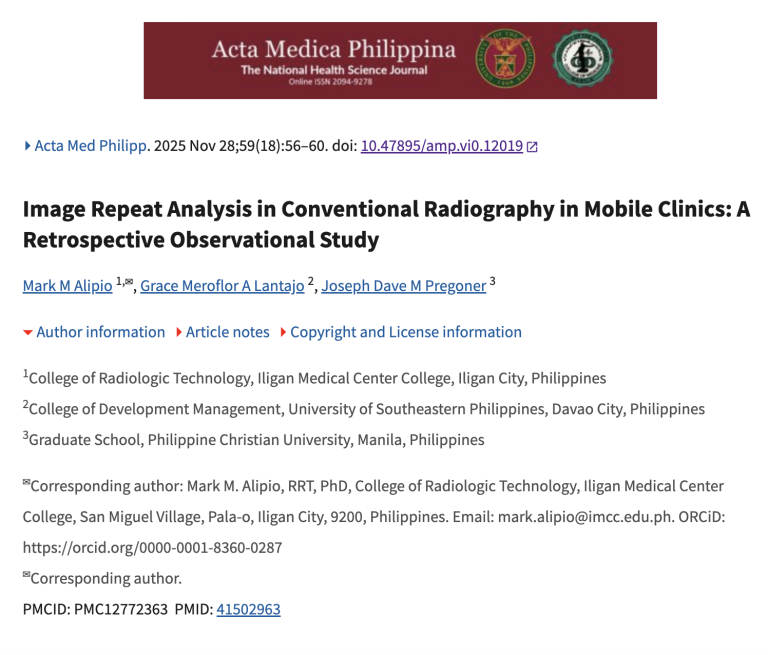
1. Improving Radiation Safety and Quality Standards in Mobile Clinics
Research: Image Repeat Analysis in Conventional Radiography in Mobile Clinics: A Retrospective Observational Study
Published: November 28, 2025
Journal: Acta Medica Philippina
DOI: 10.47895/amp.vi0.12019
The study examined 871 radiographs from five mobile clinics in the Philippines and found an image repeat rate of 13.55%, with patient positioning errors accounting for 44.07% of repeated examinations.
These findings provide evidence relevant to government policies on radiation protection, diagnostic imaging quality assurance, patient safety, and the operation of mobile healthcare facilities. The study identifies areas for improving technical training, exposure verification, and imaging protocols that may inform healthcare service standards and regulatory review.
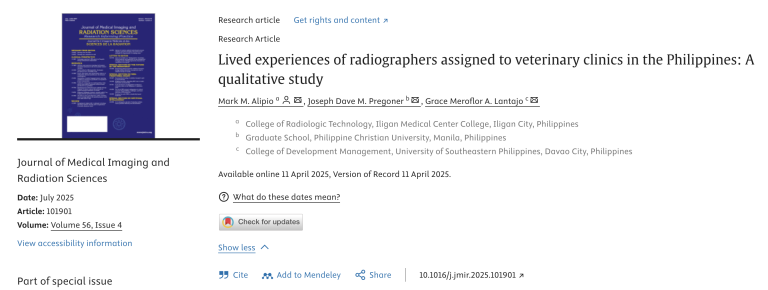
2. Strengthening Professional Standards in Veterinary Radiography
Research: Lived Experiences of Radiographers Assigned to Veterinary Clinics in the Philippines: A Qualitative Study
Published: April 11, 2025 (online)
Journal: Journal of Medical Imaging and Radiation Sciences
DOI: 10.1016/j.jmir.2025.101901
The study examined the experiences of 14 licensed radiographers working in veterinary clinics. Findings identified technical challenges, occupational demands, and gaps in formal training specific to veterinary radiography.
The research provides evidence relevant to reviewing professional training requirements, workplace safety practices, and competency standards for radiographers working in veterinary settings. These findings may support future policy discussions concerning the practice of radiologic technology beyond conventional healthcare facilities.